Lunedì 23 febbraio, ore 12:00
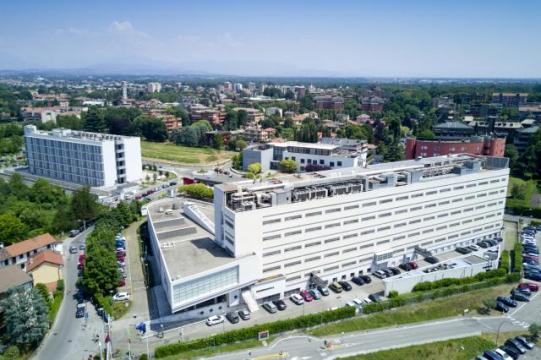
Edificio Asclepio U8
Aula 3
► Segui lo streaming su webex
Among all the aspects that can originate movement disorders, altered spinal and brainstem circuitry play a major role when exploring their neural substrate. Specifically, spinal reflex pathways integrate sensory feedback (proprioceptive afferents) and descending inputs (corticospinal and brainstem) to regulate motoneuron activity. Disruptions in these circuits can lead to abnormal muscle coactivation and impaired motor control. Current evidence supports that spinal reflexes can be trained to systematically increase or decrease spinal excitability, producing lasting reflex changes and, in some cases, functional improvement.
In this presentation, I will discuss how modulation and conditioning of spinal reflexes can be used to probe movement-related circuits and highlight their potential as targets for inducing focused, recovery-oriented neuroplasticity in rehabilitation.
Cristian Cuadra is an assistant professor in The State University of New York, at Buffalo where he directs the Neural Control of Movement and Neuromodulation Laboratory. Professor Cuadra obtained his PhD at Penn State University in Mark Latash Lab, and then a post-doctoral training with Drs. Mark Lyle, Richard Nichols, and Steve Wolf at Emory University, USA. He studies the neural mechanism of movement control with a strong emphasis on the understanding of neuropathologies. His long-term research goal is to advance rehabilitation strategies for lower and upper limb function by understanding how movement disorders originate from neuropathologies and musculoskeletal conditions across the lifespan. Currently, his laboratory focuses on the bulbospinal and spinal circuits study, their contribution to goal-directed actions (grasping, reaching, and posture) and their potential for creating neuromodulatory interventions. He currently serves as the Rehabilitation Science PhD program co-director at SUNY Buffalo.